
Dolar Crypto in Argentina: How to Use Stablecoins for Dollar Exposure and Buy Bitcoin

 Prefer us on Google
In Argentina, the phrase "dólar crypto" (also written dólar cripto) refers to holding US-dollar value in the form of a stablecoin — a crypto token designed to track the price of one US dollar. The most widely used are USDT (Tether) and USDC (USD Coin). Each token aims to stay worth about one dollar, so holding it is a way to keep savings denominated in dollars rather than in local currency.
What "dólar crypto" actually means
A stablecoin is not a separate kind of dollar. It is a token that circulates on a public blockchain and whose value is meant to mirror the US dollar, usually backed by reserves held by the issuer. When people in Argentina talk about the "dólar crypto," they almost always mean buying and holding a dollar-pegged stablecoin through an app or an exchange — much as someone elsewhere might hold a dollar balance in a banking app.
The practical appeal is simple: a stablecoin balance can be held around the clock, moved between wallets, and converted back to pesos when needed. It is a utility — a way to hold and move dollar-denominated value, used the same way as any other digital dollar balance.
How Argentines use stablecoins for dollar exposure
Common, everyday uses include:
- Dollar-denominated savings. Holding part of one's savings in a dollar-pegged token to reduce exposure to local-currency swings.
- Sending and receiving value. Stablecoins settle on-chain in minutes and can be sent to family, clients, or suppliers.
- A bridge to other crypto. Many people hold stablecoins as a stable base and convert to bitcoin or other assets when they choose to.
Whatever the use, the same principles apply: use platforms that comply with local rules, keep clear records, and declare holdings where your tax situation requires it. Stablecoins are a legitimate financial tool when used transparently.
How to buy bitcoin in Argentina: domestic regulated routes first
For most people in Argentina, the simplest way to buy bitcoin is through a locally based platform that accepts Argentine pesos. Argentina-based apps and exchanges such as Ripio, Lemon, and Belo let residents buy bitcoin and stablecoins directly with pesos, usually after a standard identity check.
Argentina now has a formal registry for these businesses. The Comisión Nacional de Valores (CNV), the national securities regulator, maintains a public register of Virtual Asset Service Providers (Proveedores de Servicios de Activos Virtuales, PSAV). Before signing up, it is worth checking that a platform appears on the CNV's PSAV register — registered providers are subject to obligations covering custody, cybersecurity, anti-money-laundering, and risk disclosure.
A typical first purchase looks like this:
- Create an account and verify your identity (a DNI and a selfie are common requirements).
- Fund the account with pesos via bank transfer.
- Buy bitcoin or a stablecoin from the app's buy screen.
- Decide where to keep it — on the platform, or moved to a personal wallet you control.
This guide does not rank providers; the right choice depends on fees, supported features, and your own due diligence.
Custody and security basics
When you buy crypto on a platform, the platform holds it for you by default. You can also move it to self-custody — a wallet where you control the private keys. Self-custody removes reliance on any single company, but it makes you fully responsible for your seed phrase: anyone who has it controls the funds, and there is no password reset. Whichever you choose, turn on two-factor authentication, stay alert to phishing, and never share your seed phrase.
Where an international exchange like WEEX fits
Beyond domestic apps, some people in Argentina also use international exchanges. WEEX is one such option. It is a global exchange that is futures-first — its core product is crypto derivatives (perpetual futures) rather than simple spot buying. For a first-time buyer who just wants to own some bitcoin in pesos, a locally registered platform is usually the more direct starting point; an international, derivatives-focused venue like WEEX is better understood as a later option, for users who specifically want futures products and understand the risks that leverage carries.
Keep it declared and above board
Using stablecoins and bitcoin in Argentina comes down to using compliant providers and keeping your affairs transparent. Keep records of your purchases, use platforms that meet local requirements, and declare holdings in line with your tax obligations. Crypto assets are volatile — the price of bitcoin can move sharply, and only a stablecoin aims to hold a steady value. Nothing here is financial advice; do your own research before buying.
Disclaimer: This content is provided for general branding and informational purposes only and doesn't constitute financial, investment, legal, or tax advice. Any events, rewards, online events, or related information mentioned herein should not be considered a recommendation, solicitation, or invitation to purchase, sell, trade, or otherwise deal in any crypto assets or to use any services. Crypto assets are highly volatile and may result in loss. WEEX services and online events may not be available in all regions and are subject to applicable laws, regulations, and eligibility requirements. You are responsible for ensuring that your use of WEEX services complies with local laws and for carefully assessing the risks before participating in any crypto-related activities.
You may also like
How to Import Your WEEX Trade History into Cryptact (for Japan Crypto Tax Filing)
Best Crypto Apps and How to Choose One (2026)
How to Get Started with Crypto: From Account to First Purchase (2026)
How to Buy Bitcoin (BTC): A Beginner's Step-by-Step Guide (2026)
How to Buy Crypto in Indonesia for Beginners (2026): Register, Deposit, and Buy Bitcoin
Best Crypto Trading App & APK in Indonesia (2026): Features, How to Download Safely, and What to Check
Crypto Exchange Comparison for Germany (2026): Fees, Products, and How to Choose
Crypto Apps Compared for Germany (2026): Features, Demo Mode and Security — What to Check Before You Download
Crypto Platform Comparison for France (2026): Fees, Products, and How to Choose
Crypto Apps Compared for France (2026): Features, Demo Mode and Security — What to Check Before You Download
NVIDIA (NVDA) Earnings Date: When Q2 FY2027 Reports and What to Watch
Is WEEX Safe? A Facts-First Look at WEEX's Reserves, Security, and Regulatory Status in Japan
When an Overseas Exchange Ends Its Japan Service: The Typical Sequence and What Users Should Check
Bybit Japan Service Termination: The Complete Timeline and What Happens on July 22, 2026
How to Withdraw From Bybit After the Japan Service Shutdown: Step-by-Step and a Deadline Checklist
The Tax Consequences of a Forced Liquidation for Japanese Crypto Traders
After Bybit's Japan Shutdown: A Neutral Map of Where Your Funds Can Go
Gold Price Outlook 2026: Third-Party Analyst Scenarios (Maintained, Educational)
Silver Price Outlook 2026: Third-Party Analyst Scenarios (Maintained, Educational)
How to Buy Bitcoin in Brazil: A Step by Step Guide for Beginners
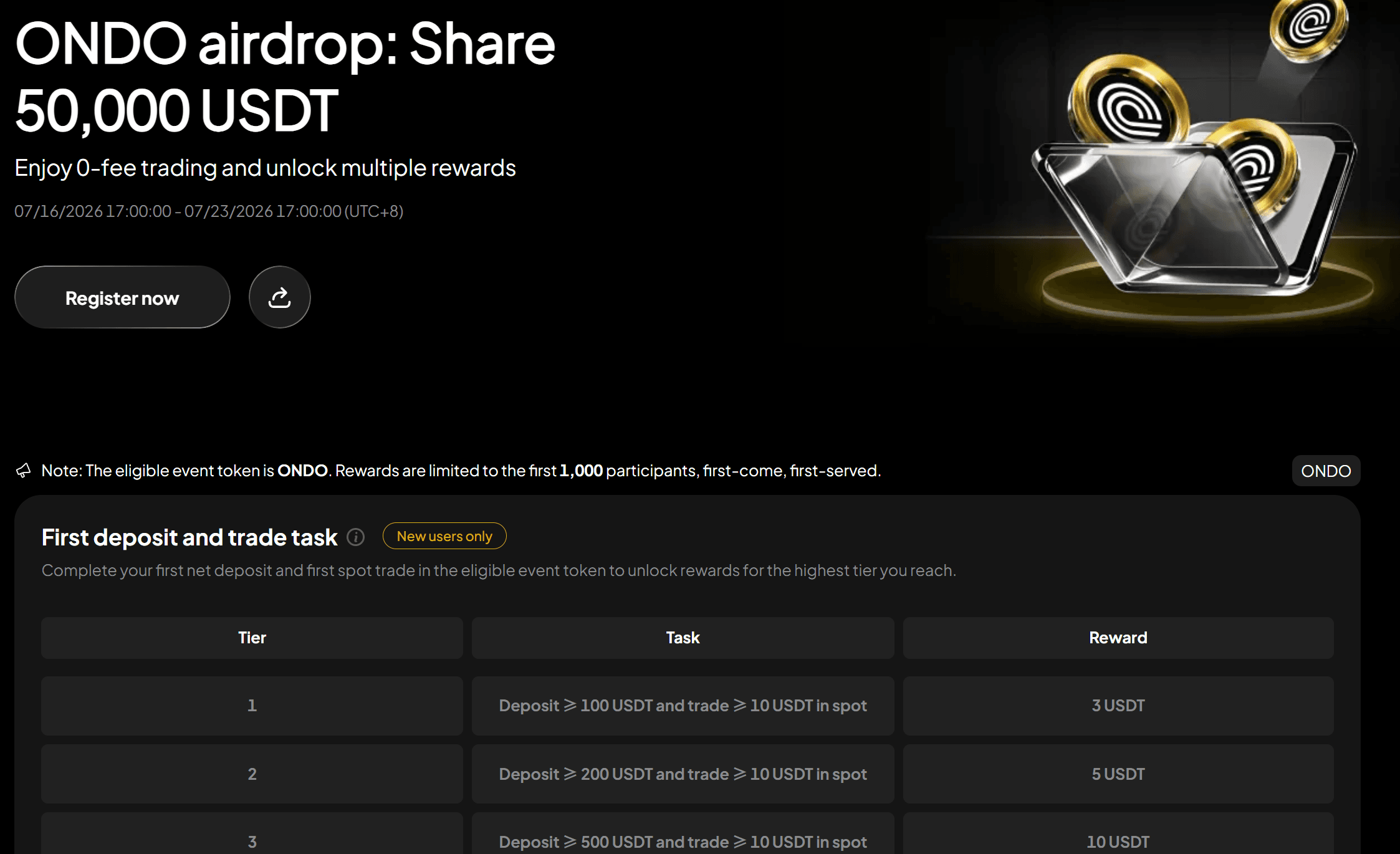
Claim ONDO Airdrop Rewards: Complete Tasks and Share 50,000 USDT
Claim ONDO Airdrop rewards on WEEX and share 50,000 USDT. Learn how to join, complete trading tasks, earn bonuses, and trade ONDO/USDT during the event.
Japan's Crypto Regulation Basics: The FSA, JVCEA, and User Protections
How Overseas Crypto Exchanges Work for Japan Residents (and the Risks)
Modelo 721 Explained: Declaring Foreign Crypto Holdings in Spain
DEX vs CEX for Perpetuals: Trading Perps On-Chain vs on an Exchange
What Is an On-Chain Order Book? How Order-Book DEXs Work
What Is a Perp DEX? Perpetual Futures on Decentralized Exchanges
Italy Crypto Tax 2026: The Capital Gains Rate Rises to 33%
Support and Resistance: How to Identify Key Levels on the Chart
Supply and Demand Zones: A Smart-Money Trading Guide
How to Import Your WEEX Trade History into Cryptact (for Japan Crypto Tax Filing)
Best Crypto Apps and How to Choose One (2026)
How to Get Started with Crypto: From Account to First Purchase (2026)
How to Buy Bitcoin (BTC): A Beginner's Step-by-Step Guide (2026)
How to Buy Crypto in Indonesia for Beginners (2026): Register, Deposit, and Buy Bitcoin
Best Crypto Trading App & APK in Indonesia (2026): Features, How to Download Safely, and What to Check



