
Why Prediction Markets Are So Hard to Regulate: The CFTC vs SEC Debate

 Prefer us on Google


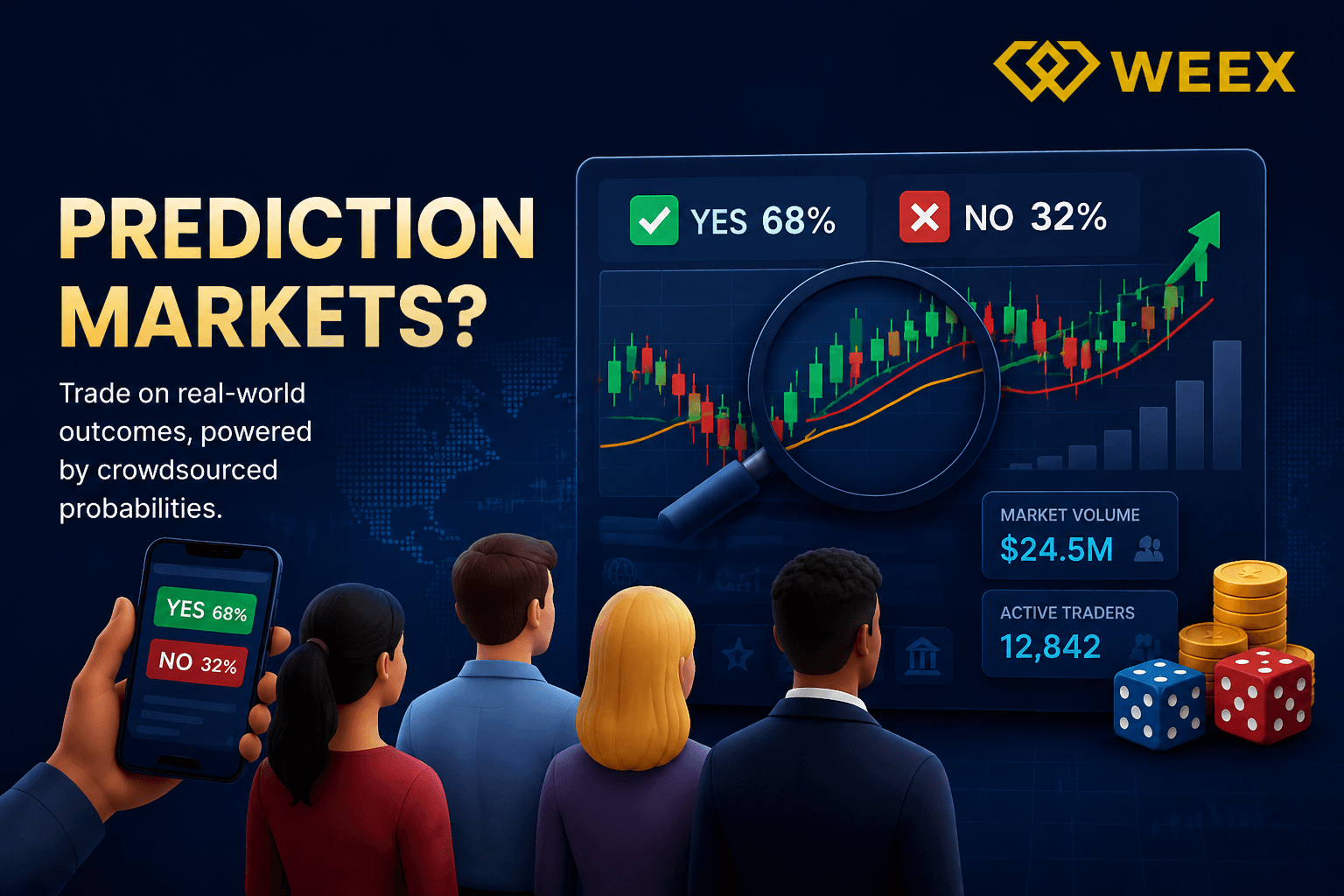
Prediction markets are facing a regulatory challenge: existing financial rules cannot easily classify these products. As platforms like Polymarket and Kalshi grow, the CFTC and SEC are debating whether certain contracts should be treated as derivatives, securities-related products, or a new market category.
The core issue is that some event contracts may go beyond simple predictions and become connected to financial value, especially when they involve publicly traded companies.
Why Prediction Markets Challenge Traditional Regulation
Traditional financial markets are generally built around clearly defined assets. Stocks represent ownership in companies, futures contracts are linked to commodities or financial instruments, and options derive value from underlying assets.
Prediction markets work differently. Instead of trading ownership or direct exposure to an asset, users trade contracts based on whether a future event will happen.
For example, a contract may ask whether a specific economic indicator will reach a certain level. The value of that contract depends on the final outcome rather than the price movement of an underlying asset.
This structure creates a regulatory challenge. While prediction markets have similarities with financial derivatives, they also operate around real-world events that do not always belong to traditional financial markets.
The question regulators must answer is whether these contracts are simply tools for forecasting events or whether some of them function like financial products tied to market value.
Why CFTC Has Been the Main Regulator for Event Contracts
The Commodity Futures Trading Commission (CFTC) has traditionally taken the leading role in regulating prediction markets because many event contracts share characteristics with derivatives.
A typical event contract includes a future outcome, a defined settlement condition, and a financial payout. This structure is similar to many products already regulated by the CFTC, including futures and swaps.
For example, a contract based on whether inflation exceeds a certain level is closely connected to economic conditions and can be viewed as a derivative based on a future event.
Under the Commodity Exchange Act, the CFTC has authority over a broad range of derivative products. This explains why many prediction market platforms have operated primarily under a CFTC framework.
Why SEC Has Entered the Prediction Market Debate
The SEC’s involvement comes from a different perspective: whether certain prediction contracts are closely connected to securities.
Under the 2010 Dodd-Frank Act, the SEC received authority over security-based swaps, which are derivatives linked to securities such as individual stocks or events directly affecting a company’s financial condition.
This creates uncertainty when prediction markets involve publicly traded companies.
For example, a contract asking whether a pharmaceutical company will receive regulatory approval for a major drug may appear to be an event prediction. However, the outcome could significantly affect the company’s revenue expectations, valuation, and stock price.
The question is whether such a contract remains a general event contract or becomes a financial product linked to securities performance.
The Hardest Question: When Does an Event Contract Become a Security Product?
The biggest regulatory challenge is defining the connection between an event and financial value.
Some cases are relatively straightforward. A contract related to a company’s bankruptcy or financial default clearly involves the company’s financial condition.
However, many situations are less obvious.
Consider a contract predicting whether a technology company will achieve a major product milestone within a year. The event itself is not a stock price prediction, but investors may interpret the outcome as a signal of future growth.
Similarly, a contract about whether a company will expand into a new market could influence expectations about future earnings, even though it does not directly measure financial performance.
These examples show why prediction markets create regulatory uncertainty. The challenge is not identifying the event, but determining how strongly that event is connected to securities value.
CFTC vs SEC: Different Regulatory Priorities
The disagreement between the CFTC and SEC is largely based on their different regulatory responsibilities.
The CFTC focuses on derivatives markets, including market integrity, trading practices, and risk management. The SEC focuses on securities markets, investor protection, and transparency.
For prediction markets, both perspectives can apply at the same time.
A contract may have the structure of a derivative because it depends on a future event, while also creating exposure to a company’s financial performance. This overlap makes it difficult to establish a single regulatory approach.
Without clear definitions, platforms may face uncertainty about which rules apply and how new products should be designed.
How Regulation Could Shape the Future of Prediction Markets
Future regulatory decisions will likely determine how prediction markets develop in the United States.
A clearer framework could help platforms understand which types of contracts are acceptable and allow users to better evaluate the risks involved. It could also improve market transparency by establishing clearer standards for contract design, settlement procedures, and user protection.
However, overlapping regulatory requirements could create additional compliance challenges. If platforms must satisfy different standards from multiple agencies, operating costs may increase and innovation could slow.
The long-term development of prediction markets will depend on whether regulators can create rules that protect users while still allowing new financial products to develop.
Why Prediction Market Regulation Matters
Regulation is important because prediction markets are becoming more influential as sources of information.
Market prices in these platforms are often interpreted as signals of how participants view future events. However, without clear oversight, concerns such as market manipulation, unfair information advantages, and unclear contract structures may become more significant.
Effective regulation does not necessarily mean limiting prediction markets. Instead, it means creating a framework where participants understand what they are trading and platforms operate under consistent standards.
Conclusion: Clear Definitions Will Decide the Future of Prediction Markets
Prediction markets are difficult to regulate because they sit between multiple financial categories. They combine elements of derivatives, forecasting tools, and event-based trading, making traditional regulatory boundaries harder to apply.
The CFTC and SEC debate reflects a broader challenge facing financial regulators: how to oversee innovative products that do not fit existing frameworks.
As prediction markets continue to grow, the industry’s future will depend on whether regulators can establish clear definitions and responsibilities. A balanced approach could allow prediction markets to develop while maintaining investor protection and market integrity.
Disclaimer: This content is provided for general branding and informational purposes only and doesn't constitute financial, investment, legal, or tax advice. Any events, rewards, online events, or related information mentioned herein should not be considered a recommendation, solicitation, or invitation to purchase, sell, trade, or otherwise deal in any crypto assets or to use any services. Crypto assets are highly volatile and may result in loss. WEEX services and online events may not be available in all regions and are subject to applicable laws, regulations, and eligibility requirements. You are responsible for ensuring that your use of WEEX services complies with local laws and for carefully assessing the risks before participating in any crypto-related activities.
You may also like

What Is Mark Cuban's Stock Options Philosophy? How SpaceX Turned Welders Into Millionaires

SPCX Stock Price and the $25 Billion Short Position: Is a Short Squeeze Coming?

Is SPCX Stock Price a Buy? What Uber, Airbnb and Rivian's IPO Crashes Tell Investors
SPCX Stock Price Hits All Time Low: What Investors Should Do Right Now

How Will the CLARITY Act and Bank-Grade Stablecoin KYC Rules Change Crypto Trading in 2026

Why Is BitMine Buying Millions of Ethereum Tokens and Staking $9 Billion in ETH in 2026
How to Protect Your Bitcoin from Physical Attacks: Lessons From the NYC Crypto Torture Case in 2026

What Is the NYC Crypto Kidnapping Case? The Soho Bitcoin Attack Explained — 2026 Case Analysis

SpaceX Stock (SPCX): Now Public, and Back Where It Started
USA Rare Earth (USAR): What It Is and How to Trade the Token
NVIDIA Stock in 2026: Real Shares, Tokenized NVDA, and Perpetuals Compared
How to Buy USAR Coin: Buying Tokenized USA Rare Earth Stock the Right Way
WEEX Poker Party Series 4: Draw Cards to Split a $1M USDT Pool
Can TENDIES Coin Recover After the Pullback? Price Outlook Explained
Who Really Makes Money on Prediction Markets? Smart Money vs Retail Traders
The Hidden Problem With Prediction Markets: Who Pays the Winners?
Prediction Markets Are the Future of Finance or Just Gambling?
How Polymarket and Kalshi Turned Predictions Into a Billion-Dollar Business
Are Prediction Markets Legal? CFTC vs SEC Regulation Explained
Why Is TSMC Stock Down After a 77% Profit Jump? What Wall Street Is Actually Worried About

Is Samsung Stock a Buy at Its Lowest Level Since the AI Boom Began?
Samsung Stock and the KOSPI Bear Market: What the 30% Decline From Peak Tells Investors
Oil Price Above $90: What the US-Iran War Means for Your Portfolio Right Now
Iran War and Bitcoin: Why Crypto Is Not Acting Like a Safe Haven at $90 Oil
KOSPI Stock Market Enters Bear Market: What a 25% Drop From the Peak Means for Investors
KOSPI Stock Bear Market: What It Means for Samsung, SK Hynix and Korean Chip Stocks
Is the KOSPI Stock Market a Buy After Entering Bear Market Territory?
SK Hynix Leveraged ETFs SKHL SKHX SKHZ: What Each One Does and Who Should Use Them
Barclays Sees 70% Upside for SK Hynix Stock: What the Overweight Rating Means
Is SK Hynix Stock a Buy Now? What the 52 Week Low and IPO Price Break Tell Investors
What Is Mark Cuban's Stock Options Philosophy? How SpaceX Turned Welders Into Millionaires
SPCX Stock Price and the $25 Billion Short Position: Is a Short Squeeze Coming?
Is SPCX Stock Price a Buy? What Uber, Airbnb and Rivian's IPO Crashes Tell Investors
SPCX Stock Price Hits All Time Low: What Investors Should Do Right Now
How Will the CLARITY Act and Bank-Grade Stablecoin KYC Rules Change Crypto Trading in 2026
Why Is BitMine Buying Millions of Ethereum Tokens and Staking $9 Billion in ETH in 2026
Contents
Popular coins
Latest articles





