
Without Cook's Apple, Can it Still Grow in the AI Era?

Original Title: The Rise of Apple's New CEO: A Hardware Expert Takes Over in the AI Era
Original Author: Rolfe Winkler, the Wall Street Journal
Translation: Peggy, BlockBeats
Editor's Note: After Jobs and Cook, Apple has finally ushered in its third CEO who can truly be seen as a "leader of the times." Unlike the clear-cut labels of the two predecessors (one defining products, the other reshaping the supply chain), John Ternus's ascension seems more like a continuation of internal logic: a "systematic figure" who is familiar with the organization, understands the products, and can drive decisions within a complex structure.
This article traces John Ternus's growth path within Apple. From the practical update of the Mac Mini, to the "decentralized coordination" in AirPods development, and then to driving the transition to in-house Mac chips, Ternus's role has never been to stand in the spotlight defining a vision, but to ensure the system operates efficiently.
From a more macro perspective, Ternus's appointment marks Apple's transition from the stage of "product vision + supply chain execution" into a period that requires redefining the growth engine. As a typical hardware engineer-type executive, he stands out with his execution capabilities, internal coordination skills, and deep understanding of the product ecosystem; his decision-making logic has been consistent—prioritizing ecosystem value over individual product profitability.
Ternus's strength lies in his deep understanding of Apple's internal mechanisms and his ability to "get things done" in a functional organization; his uncertainty lies in whether he can propose a sufficiently clear and adventurous product direction on top of the existing system.
Meanwhile, in the new generation of computing represented by conversational AI, Apple is gradually falling behind its competitors, and the gap in Siri's capabilities continues to widen. The shift in technological paradigms is weakening its past hardware-centric competitive advantage.
Therefore, the key to this succession is not whether to maintain past achievements, but whether to achieve a breakthrough: whether Ternus possesses a product insight similar to Jobs or a system restructuring ability akin to Cook is still an open question. The article implicitly suggests that Apple's current constraint does not lie in execution but in direction: in the AI era, whether hardware advantage can once again translate into platform advantage will determine whether this "engineer-type CEO" can truly usher in the next era.
In this sense, this transition looks more like a fork in the road: whether to continue optimizing on the existing product and ecosystem or to reinvest in an unclear technical direction.
The answer may soon become clear.
The original text is as follows:
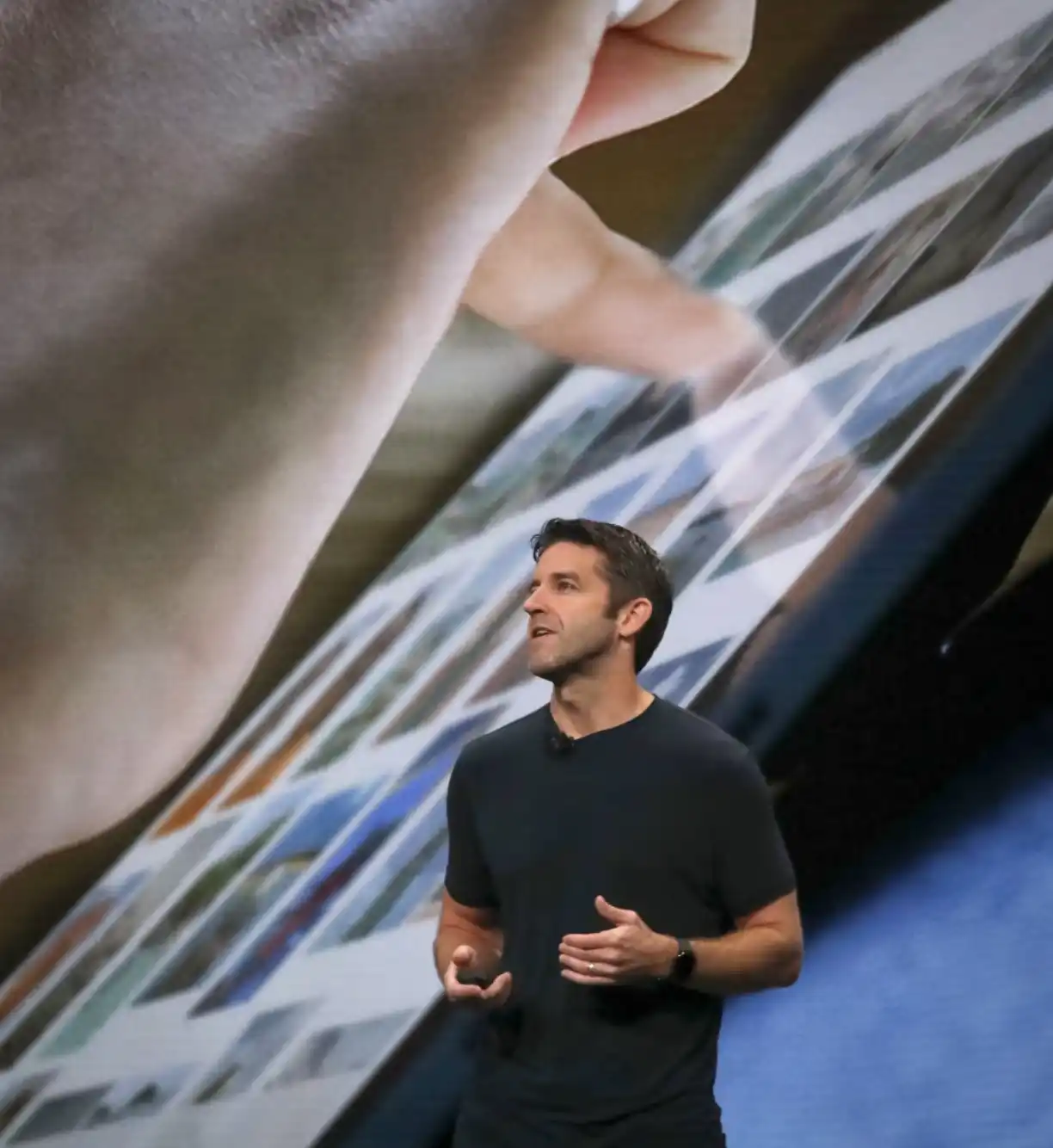
John Ternus
The Mac Mini has long been in need of an update, and John Ternus hopes he won't have to go through the design genius Jony Ive's scrutiny again.
Years ago, before Ternus was chosen to lead one of the world's largest and most influential companies, he was in charge of heading Apple's Mac hardware division. This was just one of the many stages of his rise within this relatively closed company, and it was during this process that he gradually learned how to navigate its unique and intricate internal politics.
At the time, the AI wave that would later make the Mac Mini hugely popular was still years away, but software developers were in desperate need of a new version with updated chips. And if a redesign of the Mini were to occur, it might have to be handled by Ive's industrial design team, potentially causing further delays.
Sources familiar with the matter said that after determining that the product did not require significant design changes, Ternus boldly pushed for this update. He did not dwell too much on the product's profit potential but rather focused on its value to Apple's overall ecosystem. This is just one of many cases that demonstrate his decisive decision-making, deep understanding of Apple's culture and products, and his ability to drive things forward within the company.
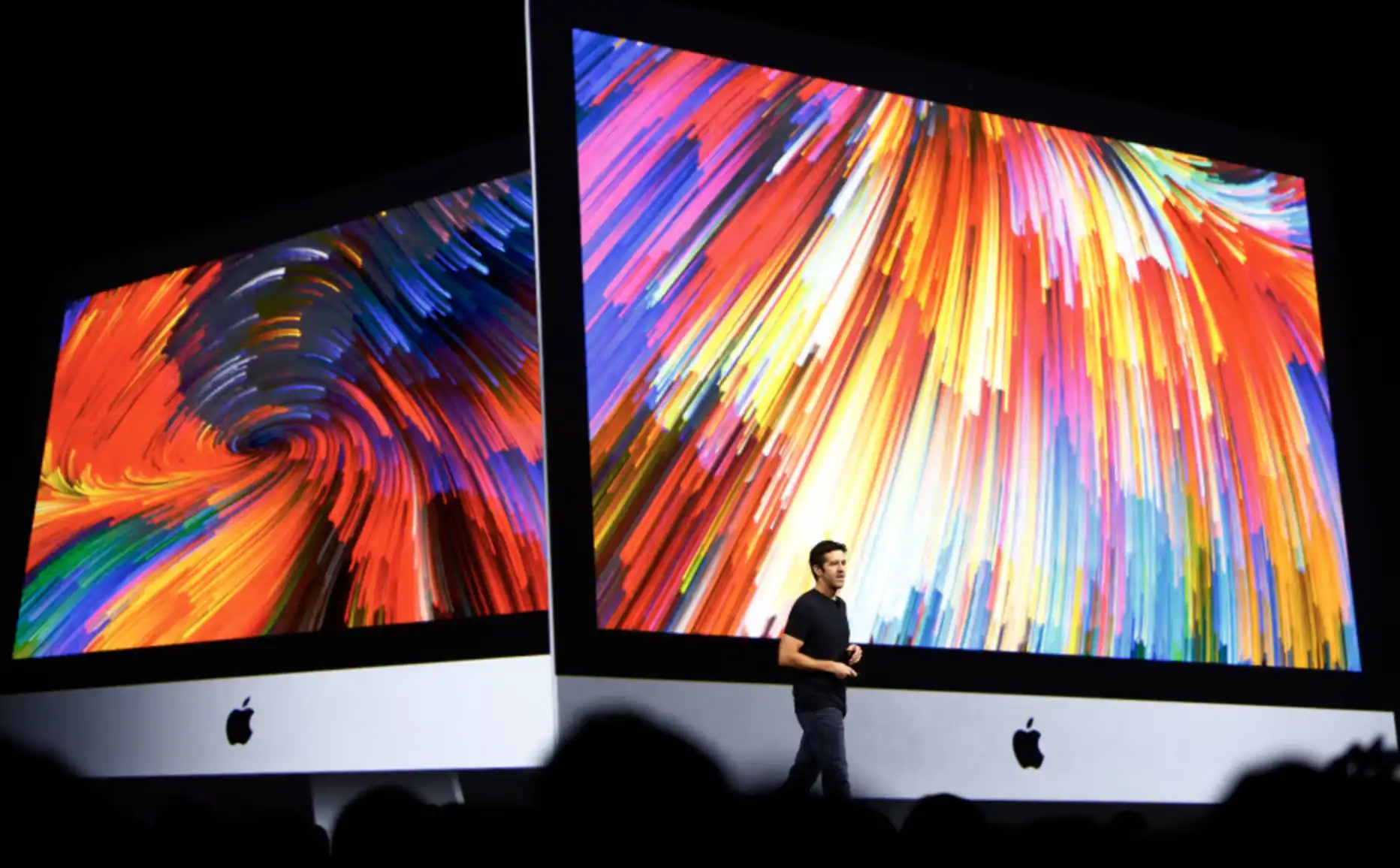
In 2017, Ternus attended the Worldwide Developers Conference (WWDC). Photo credit: GARY REYES / MEDIANEWS GROUP / GETTY IMAGES
Apple announced on Monday that over his 25-year career, these qualities have propelled Ternus to the top position within the company, taking over officially on September 1, instantly becoming one of the world's most prominent corporate leaders. Tim Cook, who has long served as Apple's CEO, will transition to the role of Executive Chairman.
Ternus will succeed two corporate legends. Steve Jobs created the most profitable product in history—the iPhone; and Cook, with his built supply chain and continuous stream of services and ancillary products, extracted trillions of dollars in value from this smartphone.
Similar to when Cook took over from Jobs, Tinus is still seen as a relatively low-profile figure externally. If Jobs was a product visionary and Cook was a supply chain expert, then Tinus is more like a hardware genius bridging the two.
With a background in mechanical engineering, Tinus has recently overseen hardware engineering for all of Apple's products. At crucial points in Apple's history, he has taken the helm of the company. Currently, with Apple maintaining its peak in iPhone sales thanks to multiple new models launched last fall, the company is also facing a dilemma—how to find the next breakthrough product.
Furthermore, Apple must undergo a transformation in the era of artificial intelligence. Over the past few decades, Apple has successively defined how people interact with computing on desktop and mobile, but now, in a new generation of computing platforms represented by human-like conversational chatbots, the company lags behind its competitors. Apple's own Siri (expected to undergo a "AI brain" upgrade this year) appears quite "primitive" in comparison.

Tinus's long tenure at Apple will play a key role in his new role. Image Source: JUSTIN LANE / EPA-EFE / REX / SHUTTERSTOCK
If you ask any Apple employee about Tinus, the answer is almost unanimous: he is a very approachable person. Those who have worked with him describe him as an excellent collaborator, able to inspire high loyalty within the team; he is calm and rational, with almost no adversaries in a company known for tense internal relationships and strong personalities.
Employees also mention his strong ability to drive matters forward in meetings, always keeping discussions focused; at the same time, he prefers to communicate directly with frontline employees who are more familiar with product details, rather than through senior management less knowledgeable about the specifics.
Outside Apple, Tinus is passionate about racing his Porsche on the track, such as at California's Laguna Seca track. Insiders say his lap times can clock under 1 minute 40 seconds, quite impressive for an amateur driver.
Tinus is tall and thin, maintaining the physique he had as a swimmer during his time at the University of Pennsylvania. His former teammate Andrew Berkowitz recalls, "Tinus is a really good guy." He also mentioned a team tradition—running in swim trunks along Locust Walk on campus in the winter as an annual "initiation" for freshmen.
Tim Cook graduated in 1997 and then worked at a virtual reality startup for four years before joining Apple in 2001.
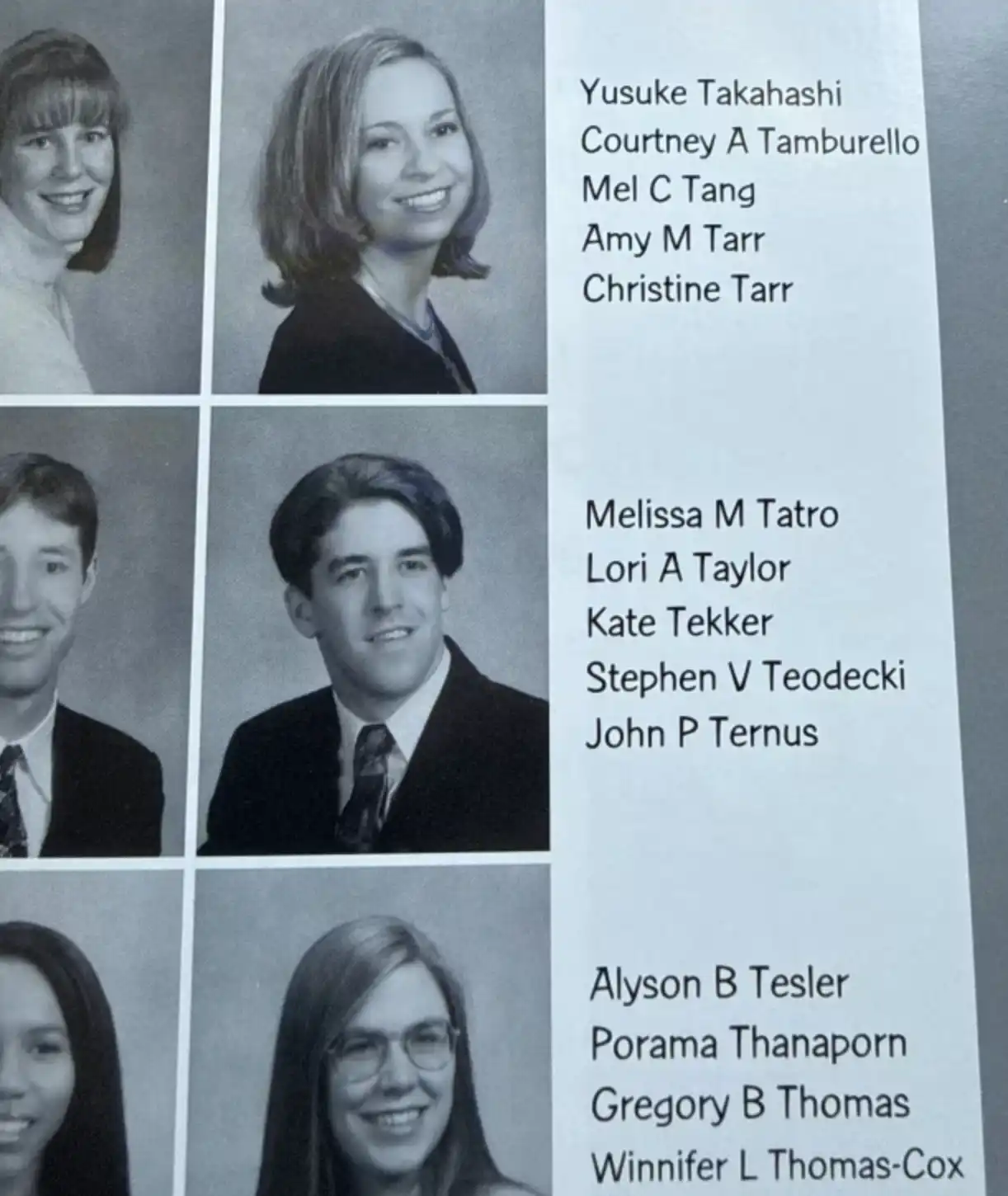
A photo of Tim Cook in the University of Pennsylvania's yearbook. Image source: Andrew Berkowitz
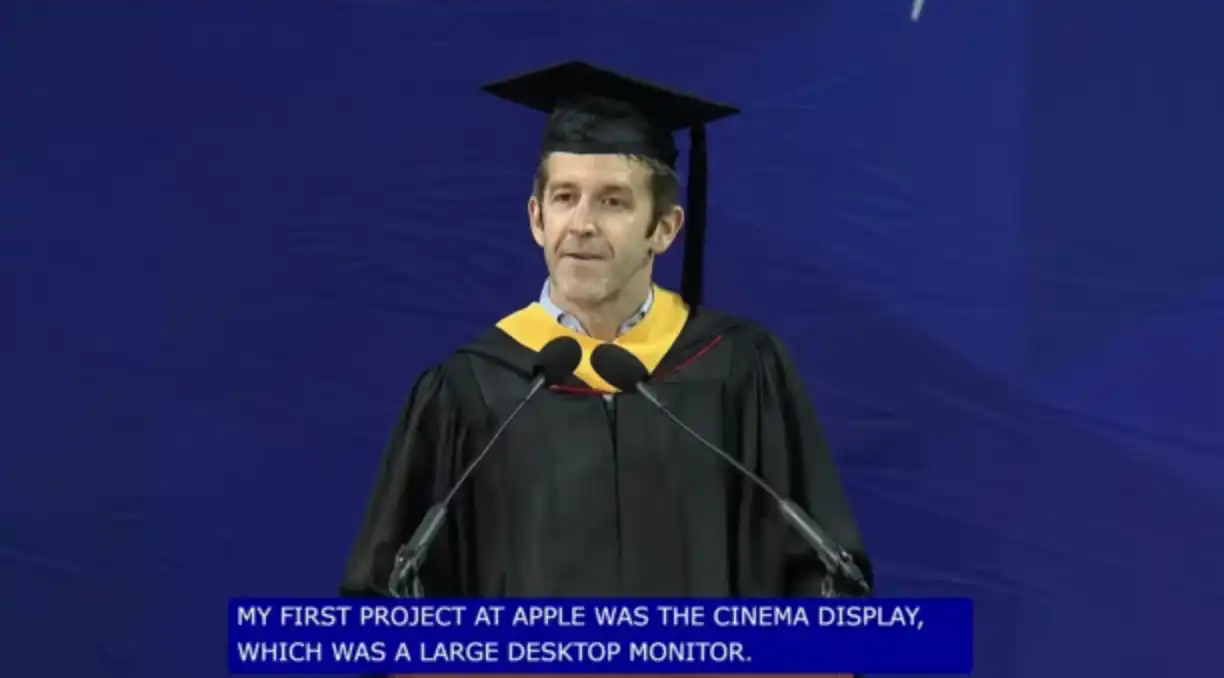
A screenshot from a YouTube video shows Tim Cook delivering a speech at the University of Pennsylvania School of Engineering undergraduate commencement ceremony in 2024.
Ten years ago, Tim Cook was one of the key executives responsible for developing AirPods. This product, now a "must-have accessory" for the iPhone, went through a turbulent development process within Apple—Cook's colleagues argued fiercely about how to maintain a stable wireless connection for the first generation of the product using Bluetooth. In the end, one executive was forced to resign, and another was reassigned to China. However, Cook, who was not yet 40 at the time, remained out of the internal strife.
One of Cook's key achievements during his tenure was driving Apple's Mac product line transition from Intel chips to in-house silicon. These chips outperformed the previous Intel-based solutions in both performance and power efficiency. However, credit for this transformation is usually attributed to Apple's hardware lead, Johny Srouji, who will take over and expand Cook's current hardware engineering role.
Cook's coordination skills and his long-standing experience at Apple will be crucial in his new role. Apple's organizational structure is quite unique: unlike other large companies that divide their business lines and appoint general managers, Apple follows a functional model. Therefore, having an "insider" familiar with all aspects of the company as CEO provides a natural advantage.
However, according to sources, Cook is not known for "bold, high-risk bets," leaving a lingering question: can he provide the product foresight that critics outside the company believe has been lacking since Steve Jobs' passing?
Cook has been seen as a key guardian of the company's culture. He has led several internal town hall meetings, inspiring employees while repeatedly emphasizing the utmost secrecy around unreleased products—a core tenet established during the Jobs era.
For months, Cook has been considered Tim Cook's successor, reflecting Apple's efforts in smoothly transitioning power—a contrast to the tumultuous successions seen in some other long-standing American companies in recent years.
Apple has also recently been intentional about boosting its public profile.
During the unveiling of the 2025 device lineup, Timnus personally showcased the all-new iPhone Air; shortly thereafter, he was sent to London to greet customers on the opening day of sales at the flagship store in the UK. Last month, he was also responsible for introducing the company's latest product—the more affordable MacBook Neo.
A few weeks ago, Apple held a 50th-anniversary celebration at Grand Central Terminal in New York. The two main stars of the day were only two: Cook and Timnus.
You may also like

Morning Report | OpenAI has submitted an S-1 registration statement draft to the U.S. SEC; Morpho completes $175 million financing

Morning Report | BitMine increased its holdings by 126,971 ETH last week; trader Eugene announced his exit from the crypto market

Wang Chuan: How can one not feel anxious after the neighbor Old Wang made thirty times profit by investing in storage stocks? (Seven) - A quarter-century cycle

Cryptocurrency CEXs are flocking to sell US stocks, and traditional brokerages are facing an "uninvited guest."

$75 billion in foreign capital has fled, and South Korean retail investors have absorbed it all using leverage

Japan’s Three Megabanks Plan Joint Stablecoin Issuance in Fiscal 2026
MUFG, SMBC, and Mizuho reportedly plan to jointly issue fiat-pegged stablecoins in fiscal 2026, signaling Japan’s growing push into bank-led digital payment infrastructure.

Humanity Discloses H Token Dual-Chain Attack Details, With Losses on Ethereum and BSC Exceeding $36 Million
Humanity said the H token attack across Ethereum and BSC caused more than $36 million in losses after leaked ProxyAdmin keys enabled malicious contract upgrades and token minting.
White House Discusses CLARITY Act With Law Enforcement Ahead of Senate Vote
The White House discussed the CLARITY Act with law enforcement ahead of a Senate vote, focusing on illicit finance risks and developer protections.

Bitcoin Trading Guide 2026: Strategies for Experienced Traders

What Is XAUT and PAXG? Why Tokenized Gold Is Booming in 2026

Will the SpaceX IPO Hurt Bitcoin? Here's What Traders Are Watching

Foreign selling in the South Korean stock market accelerates, with cumulative net sales reportedly reaching $75 billion this year
On June 9, The Kobeissi Letter, citing Goldman Sachs data, reported that global investors are selling South Korean stocks at an unusually rapid pace. In the latest trading session, foreign investors sold about $801 million worth of Kospi constituent stocks again; total foreign outflows last week reached about $10 billion, and the market has been in net foreign selling on nearly every trading day over the past month. According to the data cited in the report, foreign investors have sold about $75 billion worth of South Korean stocks so far this year. Meanwhile, South Korean retail and institutional investors together recorded roughly $69 billion in net buying over the same period, suggesting that the market’s main buying support has come from domestic capital rather than returning overseas funds. The information currently disclosed still mainly comes from The Kobeissi Letter’s retelling and Goldman Sachs data summaries, while public details on the statistical period and the specific definition of “selling” remain relatively limited.

Fortune Warns of Strategy’s Financing Structure Risks as Bitcoin Premium Narrows
Fortune warned that Strategy’s Bitcoin treasury model faces growing financing risks as MSTR’s net asset premium narrows and preferred stock dividend pressure increases.

Ferrari Challenge Le Mans: Carl Moon to Dominate in WEEX Livery

Sahara AI Responds to SAHARA’s Sharp Drop: No Contract or Product Security Issues Found, Internal Investigation Underway
Sahara AI responded to SAHARA’s 60% price drop, saying no token contract or product security issues have been found and an internal investigation is underway.

WEEX Deposit/Withdrawal Dynamic Island: Your Asset Status, Always in Sight
Scaling Crypto Derivatives: The Digital Asset Infrastructure Behind High-Volume Trading
In the fast-moving digital asset ecosystem, derivatives platforms face an extreme architectural test. High-leverage futures markets demand more than just standard security—they require absolute operational precision, zero-latency matching engines, and ironclad structural scalability, all while navigating intense market volatility.
As global platforms scale to meet these demands, the industry is shifting away from rigid, monolithic setups toward a more agile, "decoupled" infrastructure philosophy.
The Blueprint for High-Volume Copy TradingFor elite global exchanges like WEEX (founded in 2018), this architectural choice becomes critical when scaling high-volume retail features like social copy trading. When thousands of users automatically mirror the real-time strategies of elite traders simultaneously, it triggers sudden, monumental spikes in concurrent transactional volume.
To prevent execution latency or settlement bottlenecks during these peak volatility events, a platform's primary engine must remain entirely dedicated to risk management, copy-trade synchronization, and order matching.
The Architectural Rule: New-generation platforms must separate front-end user execution engines from heavy backend infrastructural overhead to eliminate operational friction.
By separating these layers, platforms can maintain complete sovereignty over their trading environments and user experiences while strategically aligning with institutional-grade infrastructure ecosystems. This strategic framework allows modern exchanges to leverage advanced Digital Asset Custody infrastructure such as Cobo’s behind the scenes, ensuring that backend wallet management scales elastically alongside trading spikes.
Capitalizing on Market Momentum and 400× LeverageIn a derivatives arena where platforms offer up to 400× leverage on perpetual contracts, capital efficiency and market agility are core business metrics. To capture market momentum, an exchange needs the ability to rapidly expand its asset offerings, supporting everything from legacy crypto assets to sudden, trending altcoins across a massive library of trading pairs.
Adopting a flexible, scalable Wallet-as-a-Service (WaaS) solution such as Cobo’s could completely rewrite the development timeline for high-growth exchanges. Instead of spending months of engineering capital building out custom backend wallet architectures for every new blockchain network, platforms can deploy localized infrastructure in days.
This agility allows platforms to instantly scale their listings to over a thousand trading pairs without compromising security or delaying time-to-market. It mirrors the exact operational advantages seen during high-velocity market events, similar to how advanced wallet infrastructure empowers platforms during sudden asset surges; allowing exchanges to pass that speed and liquidity directly to their global user base.
A Mature Foundation for GrowthThe synergy between trusted infrastructure ecosystems and global trading platforms represents the natural evolution of a maturing crypto market. As WEEX continues to scale its global spot and derivatives offerings for over 6 million users, adopting robust backend paradigms proves that platforms no longer have to compromise between cutting-edge trading velocity and uncompromised structural security.

Get Paid to Onboard? Try WEEX’s New Homepage with Rewards for Registration, Deposit & Trade
Morning Report | OpenAI has submitted an S-1 registration statement draft to the U.S. SEC; Morpho completes $175 million financing
Morning Report | BitMine increased its holdings by 126,971 ETH last week; trader Eugene announced his exit from the crypto market
Wang Chuan: How can one not feel anxious after the neighbor Old Wang made thirty times profit by investing in storage stocks? (Seven) - A quarter-century cycle
Cryptocurrency CEXs are flocking to sell US stocks, and traditional brokerages are facing an "uninvited guest."
$75 billion in foreign capital has fled, and South Korean retail investors have absorbed it all using leverage
Japan’s Three Megabanks Plan Joint Stablecoin Issuance in Fiscal 2026
MUFG, SMBC, and Mizuho reportedly plan to jointly issue fiat-pegged stablecoins in fiscal 2026, signaling Japan’s growing push into bank-led digital payment infrastructure.

Popular coins
Latest Crypto News


