
What Can the Cryptocurrency Market Trade One Year Later?



Original Title: "What Can the Crypto Market Trade One Year Later?"
Original Author: Mandy Azuma, Odaily Planet Daily
This weekend, amid internal and external troubles, the crypto market experienced another bloodbath. BTC is currently hesitating around its Strategy holding cost price of $76,000, while altcoins are contemplating self-harm just by looking at the price.
Behind the current turmoil, after recent discussions with projects, funds, and exchanges, a recurring question keeps popping up in my mind: What will the crypto market be trading one year from now?
And the more fundamental question behind it is: If the primary market no longer produces the "future secondary," then what will the secondary market be trading one year from now? What changes will occur in the trading platforms?
Although the death of altcoins has long been a topic of discussion, the market has not lacked projects in the past year. Projects are still lining up for TGEs every day. As media professionals, we are still actively engaging with project teams for marketing and promotion.
(Please note, in this context, when we mention "projects," we are mostly referring to the narrow definition of "project teams." In simplest terms, these are projects aiming to compete with Ethereum and its ecosystem—foundational infrastructure and various decentralized applications. These are "token issuance projects," which are the cornerstone of what our industry calls native innovation and entrepreneurship. Therefore, platforms emerging from industries such as Meme and traditional sectors entering the crypto space are temporarily set aside for discussion.)
If we push the timeline back a bit, we'll find a fact that we have all been avoiding discussing: these projects preparing for TGE are all "existing old projects." Most of them raised funds 1–3 years ago and are only now reaching the token issuance stage, even under internal and external pressures, they are compelled to take this token issuance step.
This seems to be a kind of "industry destocking," or to put it more bluntly, queuing up to complete the life cycle, issuing tokens to provide an account to the team and investors, and then lying down quietly awaiting death, or spending the funds in the account hoping for a miracle.
The Primary Market Is Dead
For those of us who entered the industry during the ICO era or even earlier, experienced several bull-bear transitions, and witnessed the industry's dividends empowering countless individuals, subconsciously, we always feel that as long as time is sufficient, new cycles, new projects, new narratives, and new TGEs will always emerge.
However, the reality is that we are already far from the comfort zone.
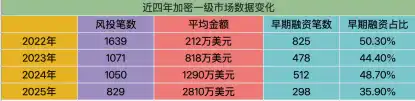
Looking at the data directly, within the most recent four-year cycle (2022-2025), excluding special primary market activities such as mergers and acquisitions, IPOs, and public offerings, the number of financing transactions in the crypto industry has shown a significant downward trend (1639 ➡️ 1071 ➡️ 1050 ➡️ 829).
The reality is even bleaker than the data, as the primary market has not only seen a decrease in overall funding amount but also a structural collapse.
Over the past four years, the early-stage rounds representing the industry's fresh blood (including angel, pre-seed, and seed rounds) have experienced a significant decline in the number of deals (825 ➡️ 298 over four years, a decrease of 63.9%), showing a larger drop compared to the overall funding amount (a decrease of 49.4%). The primary market's ability to provide funding to the industry has been shrinking.
Sectors with a rising number of deals include financial services, trading platforms, asset management, payments, AI, and other applied encryption technologies. However, these have limited practical implications since the vast majority will not issue their own tokens. In contrast, native "projects" in L1, L2, DeFi, social, and similar areas have seen a more significant decline in funding.
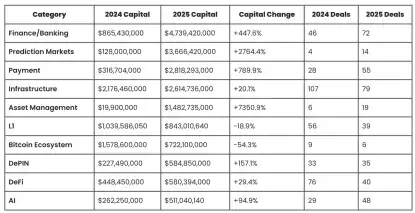
Odaily Note: Chart sourced from Crypto Fundraising
One easily misinterpreted data point is the substantial reduction in the number of deals, coupled with an increase in the average deal size. This is primarily due to the "mega-deals" capturing a significant amount of funds from the traditional finance side, greatly inflating the average. Additionally, mainstream VCs tend to double down on a small number of "super projects," such as Polymarket's multi-billion-dollar rounds.
From the perspective of crypto capital, this imbalance is even more pronounced.
Recently, a friend outside the industry asked me about a well-known long-established crypto fund that was fundraising. After reviewing their Deck, he was puzzled why their returns were "so poor." The table below shows the actual data from the Deck; I won't mention the fund's name but have only extracted their fund performance data from 2014 to 2022.
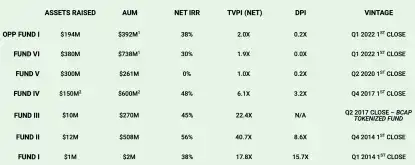
It is clear to see that between 2017 and 2022, there has been a significant change in this fund's IRR and DPI — the former representing the fund's annualized return level, more reflective of the "on-paper money-making ability," while the latter represents the cash multiple already returned to LPs.
Looking at different vintage years, this set of funds' returns demonstrate a very clear "cyclical discontinuity": funds established from 2014 to 2017 (Fund I, Fund II, Fund III, Fund IV) have shown a significant lead in overall returns, with TVPI generally ranging from 6x to 40x, Net IRR staying between 38% and 56%, and also having achieved high DPI, indicating that these funds not only have high paper returns but have also undergone significant cash-outs, benefiting from the early days of crypto infrastructure and the period when leading protocols went from 0 to 1.
For funds established after 2020 (Fund V, Fund VI, and the 2022 Opportunity Fund), there has been a clear downgrade, with TVPI mostly concentrated in the 1.0x–2.0x range. DPI is close to zero or very low, indicating that returns mostly remain at the unrealized level and cannot be converted into real exit gains. This reflects that in a context of valuation inflation, increased competition, and declining project quality supply, the primary market cannot replicate the excess return structure previously driven by the "new narrative + new asset supply."
The real story behind the data is that after the DeFi Summer hype in 2019, the primary market valuations of crypto-native protocols were inflated. However, these projects faced a weak narrative, industry tightening, exchanges controlling liquidity tied to temporary Term modifications, and other conditions when they actually launched their tokens two years later. They generally performed poorly, with some even experiencing a market cap inversion, making investors the weaker party and fund exits challenging.
Nevertheless, these fund misalignments can still create a semblance of false prosperity in the industry, until some giant star funds raised funds nearly two years later, revealing the grim reality of the actual data.
The fund I cited currently manages nearly $3 billion, which further illustrates its role as a mirror reflecting the industry cycle—whether it is doing well is no longer a matter of individual project selection; the trend has passed.
While traditional funds are currently struggling to raise funds, some can still survive, lie flat, collect management fees, or transition to investing in AI. Many other funds have already closed or shifted to the secondary market.
For example, in the Chinese market, the "Ethereum Milk King," Boss Yilihua, who was once a representative figure in the primary market not long ago, with an average annual investment in over a hundred projects.
Shanzhai's Substitute Is Never Meme
When we talk about the exhaustion of crypto-native projects, one exception is the Meme explosion.
For the past two years, there has been a repeated phrase in the industry: Shanzhai's substitute is Meme.
But looking back now, this conclusion has actually been proven wrong.
During the early stages of the Meme wave, we played Meme in a "mainstream Shanzhai" way—filtering out so-called fundamentals, community quality, and narrative rationality from a large number of Meme projects, trying to find the project that can survive long-term, continuously refresh itself, eventually grow into Doge, or even the "next Bitcoin."
However, today, if someone tells you to "hold onto Meme" in this manner, you would surely think their brain is fried.
The current Meme is an instant monetization mechanism of popularity: it is a game of attention and liquidity, a product of the batch production by Dev and AI tools,
it is an asset form with an extremely short lifecycle but continuous supply.
Its goal is no longer "survival," but to be seen, to be traded, to be used.
We also have several long-term profitable Meme traders in our team; obviously, what they focus on is not the future of the project but the rhythm, diffusion speed, emotional structure, and liquidity path.
Some say Meme is no longer playable now, but in my opinion, after Trump's "final cut," it has precisely matured as a new asset form.
Meme was never meant to be an alternative to "long-term assets," but rather a return to the attention economy and liquidity game itself, becoming purer, more brutal, and less suitable for most ordinary traders.
Seeking Solutions Outward
Asset Tokenization
So, as Meme becomes more specialized, Bitcoin becomes more institutionalized, altcoins languish, new projects are about to rupture, what can those of us who like to engage in value research, comparative analysis judgment, with speculative attributes but not purely high-frequency gambling probability, and wish for sustainable development, play?
This issue is not only relevant to retail investors.
It also stands before exchanges, market makers, and platforms—after all, the market cannot always rely on higher leverage, more aggressive contract products to sustain activity.
In fact, as the entire inherent logic begins to overturn, the industry has long been seeking external solutions.
The direction we are all discussing is to repackage traditional financial assets as on-chain tradable assets.
Stock tokenization, precious metal assets are becoming a top priority for trading platforms. From various centralized exchanges to the decentralized platform Hyperliquid, they have all seen this path as a key breakthrough, with the market offering positive feedback—last week, during the craziest days of the precious metals market, silver trading volume on Hyperliquid exceeded $1 billion in a single day, with coin stocks, indices, precious metals, and other assets briefly occupying the top ten in trading volume, boosting HYPE by 50% in the "all-asset trading" narrative surge.
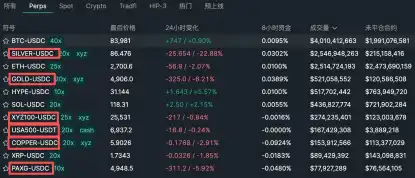
Indeed, some of the current slogans, such as "providing traditional investors with a new choice, low threshold," are premature and not realistic.
However, from a crypto-native perspective, it may address internal issues: the supply and narrative of native assets have slowed down. After the old coins languish and new coins are in short supply, what new trading reasons can crypto trading platforms provide to the market?
Tokenized assets are easy for us to get started with. In the past, we studied: public chain ecosystems, protocol revenue, token models, unlocking schedules, and narrative space.
Now, the focus of our research is shifting to: macro data, financial reports, interest rate expectations, industry cycles, and policy variables. Of course, we have been studying many parts of these for a long time.
Essentially, this is a migration of speculative logic, not just a simple category extension.
Launching gold tokens and silver tokens is not just adding a few more currencies. What they are truly trying to introduce is a new trading narrative—bringing the volatility and rhythm that originally belonged to the traditional financial market into the crypto trading system.
Prediction Markets
In addition to bringing "external assets" onto the chain, another direction is to bring "external uncertainty" onto the chain—prediction markets.
According to Dune Analytics, despite the cryptocurrency market experiencing a crash last weekend, prediction market trading remains active, with weekly transaction volume hitting a new all-time high of 26.39 million transactions. Polymarket, with a transaction volume of 13.34 million, ranked first, followed closely by Kalshi with 11.88 million transactions.
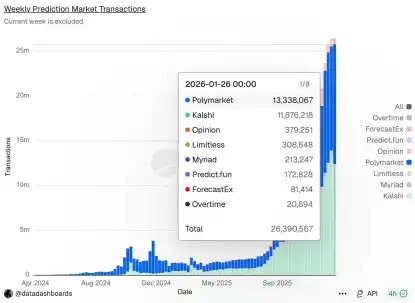
Regarding the development prospects and scale expectations of prediction markets, we will not elaborate on them in this article. Odaily has recently been writing more than two analysis articles on prediction markets every day... You can search and use them on your own.
I want to discuss from the perspective of a coin circle user why we participate in prediction markets. Is it because we are all gambling addicts?
Of course, it is.
In fact, for a long time, meme traders were fundamentally not gambling on technology but on events: whether or not a coin will be listed, whether there will be a partnership announcement, whether a coin will be issued, whether a new feature will be launched, whether there are compliance-related advantages, and whether the next narrative can be hitched onto.
Price is just the outcome; events are the starting point.
And the prediction market has, for the first time, broken this matter down from an "implicit variable in the price curve" into an object that can be directly traded.
You no longer need to indirectly bet on whether an outcome will occur by buying a token; instead, you can directly bet on the outcome itself.
More importantly, prediction markets are adapting to the current environment of "new project shutdowns" and narrative scarcity.
As the tradable universe of assets shrinks, market attention is increasingly focused on macro trends, regulation, politics, whale behavior, and major industry milestones.
In other words, while the tradable "targets" are diminishing, the tradable "events" have not decreased; in fact, they have increased.
That is also why, over the past two years, the liquidity that has truly emerged in prediction markets has almost entirely come from non-crypto-native events.
Essentially, it is introducing the uncertainty of the external world into the crypto trading system. From a trading experience perspective, it is also more user-friendly for traditional crypto traders:
The core issue is extremely simplified to one question—is this outcome going to happen? And, if so, is the current probability expensive or cheap?
Unlike Memes, the barrier to entry for prediction markets lies not in execution speed but in information assessment and structural understanding.
With that said, do you feel like you could give it a try too?
Conclusion
Perhaps the so-called crypto world will ultimately disappear in the near future, but before it does, we are still trying our best. As the era of "new coin-driven trading" gradually fades, the market always needs a new speculative vehicle that is new, has a low entry barrier, is narrative-driven, and can be sustainable.
Or, in other words, the market will not disappear; it will only migrate. When the first level no longer produces the future, what can truly be traded at the second level are these two things—the uncertainty of the external world and the tradable narrative that can be repeatedly reconstructed.
Perhaps what we can do is to adapt early to another transition of speculative paradigms.
You may also like

Morning Report | OpenAI has submitted an S-1 registration statement draft to the U.S. SEC; Morpho completes $175 million financing

Galaxy Deep Research Report: How Hyperliquid's HIP-4 Upgrade Changes the Landscape of Prediction Markets?

Latest research from 13 top universities including Cornell University: The current state, challenges, and misconceptions of the fusion of Crypto and AI

Deconstructing Anthropic: The Best AI Company, Possibly Also a Type of Organizational Invention

Every exchange is a "Universal Exchange."

The counterattack of traditional finance: Alliance chains are quietly reviving
Pantera Capital Partner: How Tokenization is Restructuring the Private Equity and Early Investment Ecosystem?

Mastercard Launches Agent Pay for AI, Plans to Record AI Agent Payment Authorizations on Polygon
Mastercard launched Agent Pay for AI, a new payment protocol designed to help AI agents make small payments such as pay-per-use access to data and APIs. The system plans to record human-granted AI agent permissions on Polygon, focusing on verifiable authorization, identity, and payment controls.

Curve Deploys Llamalend v2 on Optimism With 250,000 OP Incentives
Curve launched Llamalend v2 on Optimism with 250,000 OP incentives from the Optimism Foundation. The upgrade expands Llamalend beyond its earlier crvUSD-focused model, adding broader collateral support, LlamaRisk market reviews, and the ability to use Curve LP tokens as collateral.

Raydium Old Liquidity Pool Reportedly Exploited, With $1.34 Million Moved to Ethereum and Tornado Cash
An old Raydium liquidity pool was reportedly exploited for around $1.34 million in USDC, RAY, and wSOL, with the stolen funds bridged to Ethereum and deposited into Tornado Cash. The incident highlights the tail risks of legacy DeFi pools, old contracts, and cross-chain fund laundering paths.
Kalshi Executive Challenges “SBF Backed AI Unicorns” Narrative, Says Leopold Aschenbrenner Was Key Figure
Kalshi executive John Wang questioned the “SBF backed AI unicorns” narrative, saying Leopold Aschenbrenner was the key figure behind major AI investment decisions.

New York Proposes Stricter Stablecoin Issuer Rules Aligned With Federal GENIUS Act
NYDFS proposed stricter stablecoin issuer rules aligned with the GENIUS Act, covering reserves, custody, redemption timelines, audits, and capital buffers.

CryptoQuant Says Bitcoin Profitable Supply Is Near 45% Pressure Zone as On-Chain Data Points to Market Repricing
CryptoQuant said Bitcoin’s profitable supply is nearing the 45% pressure zone, signaling rising market stress, unrealized losses, and a possible on-chain repricing phase.

Bitcoin Falls Below 200-Week Moving Average as On-Chain Data Shows Over Half of Supply in Loss
Bitcoin dropped below its 200-week moving average as on-chain data showed over 50% of circulating supply is now in loss, signaling rising market stress.

CFTC Reportedly Plans New Prediction Market Rules Focused on Manipulation Risk and Public Interest Review
The CFTC is reportedly preparing new prediction market rules focused on manipulation risk, public interest review, and retail trader protections.

Meet the new WEEX trial fund—your gateway to greater profits

WEEX Labs Lands at Dutch Blockchain Week: A Disruptive Crypto × AI Conversation Sets Sail in Amsterdam
SK Hynix Reportedly Plans U.S. ADR Listing as Early as August, With SEC Approval Possible in Late June
SK Hynix may pursue a U.S. ADR listing as early as August, with SEC approval reportedly possible in late June amid strong AI chip supply chain demand.
Morning Report | OpenAI has submitted an S-1 registration statement draft to the U.S. SEC; Morpho completes $175 million financing
Galaxy Deep Research Report: How Hyperliquid's HIP-4 Upgrade Changes the Landscape of Prediction Markets?
Latest research from 13 top universities including Cornell University: The current state, challenges, and misconceptions of the fusion of Crypto and AI
Deconstructing Anthropic: The Best AI Company, Possibly Also a Type of Organizational Invention
Every exchange is a "Universal Exchange."
The counterattack of traditional finance: Alliance chains are quietly reviving


