
The Grim Reaper is cryptocurrency's biggest "HODLer"

Original Article Title: The Biggest Buyer Of Crypto Is Death
Original Article Author: @PixOnChain, Crypto KOL
Original Article Translation: Saoirse, Foresight News
Crypto enthusiasts always say, "Not your keys, not your coins." This statement sounds powerful and is indeed true. However, behind this statement lies a mirrored logic — "Only your keys can truly own your cryptocurrency."
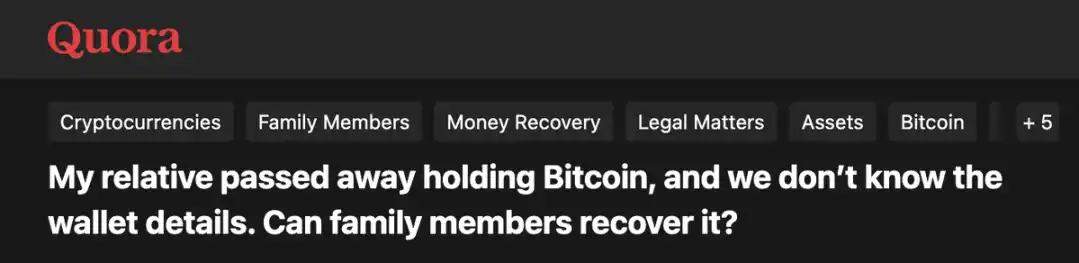
If no one else knows how to access your wallet, then at the moment you take your last breath, your cryptocurrency is effectively "gone." Of course, this is not a literal disappearance — it still exists on the blockchain ledger. But economically, it is akin to being burnt.
So, how big is this "Death Buyer" phenomenon?
Today, most cryptocurrency holders are quite young, with the majority falling between the late twenties and early forties.
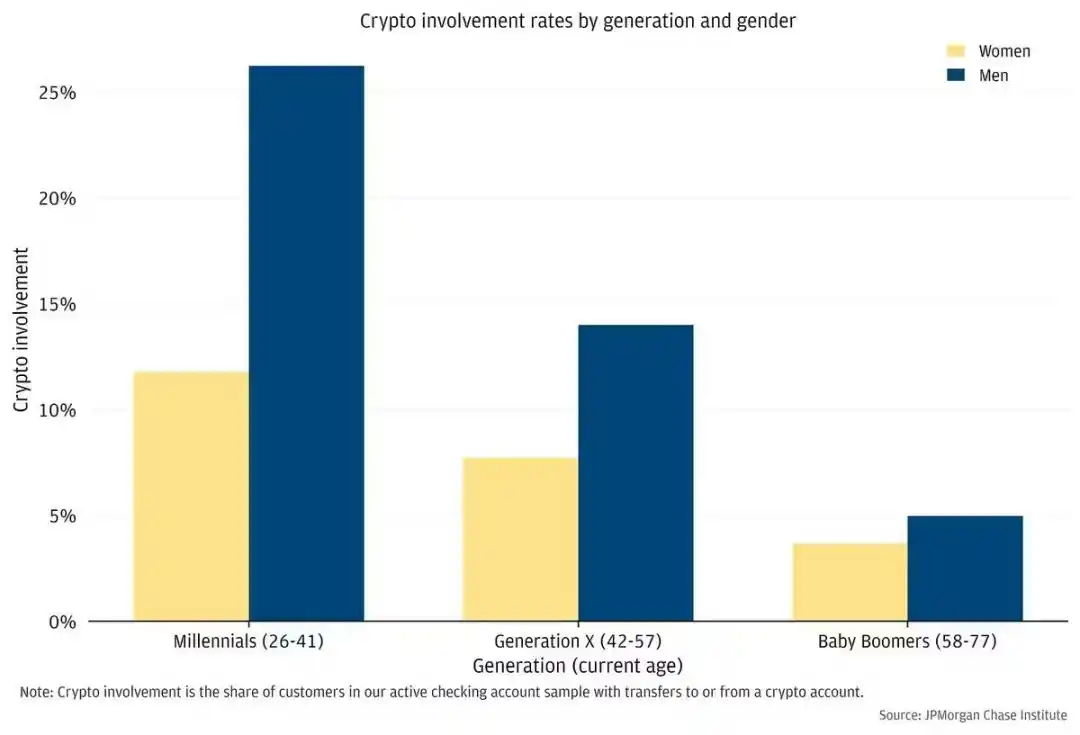
There are very few holders beyond retirement age, making the issue of "Death-Induced Cryptocurrency Loss" easily overlooked. Nevertheless, the associated data is still staggering:
· There are approximately 60 million deaths globally each year (based on a total global population of around 8 billion);
· There are around 500 million cryptocurrency holders globally (equivalent to 1 in 16 people holding cryptocurrency);
· Due to cryptocurrency holders being younger on average than the global population, their death rate is lower, with a conservative estimate of around 0.2% annually;
· Based on this calculation, approximately 1 million people (500 million × 0.2%) out of 500 million holders will pass away each year.
Currently, most cryptocurrency is still self-custodied by individuals, with very few making inheritance plans. Even if only 10% of deceased individuals' wallets cannot be accessed due to the absence of knowledge of how to access them, around 100,000 wallets become inaccessible each year. Assuming conservatively that the average balance in these inaccessible wallets is only $20,000, approximately $2 billion in cryptocurrency exits circulation yearly. Furthermore, this number will continue to grow over time — after all, the younger generation will also age.

The percentage of cryptocurrency "destroyed" annually due to death
This leaves us with a key question: Since the advantage of self-custodying cryptocurrency is the removal of intermediaries, how can we avoid reintroducing intermediaries when passing on these assets?
Inheriting Assets Not Originally Designed for Inheritance
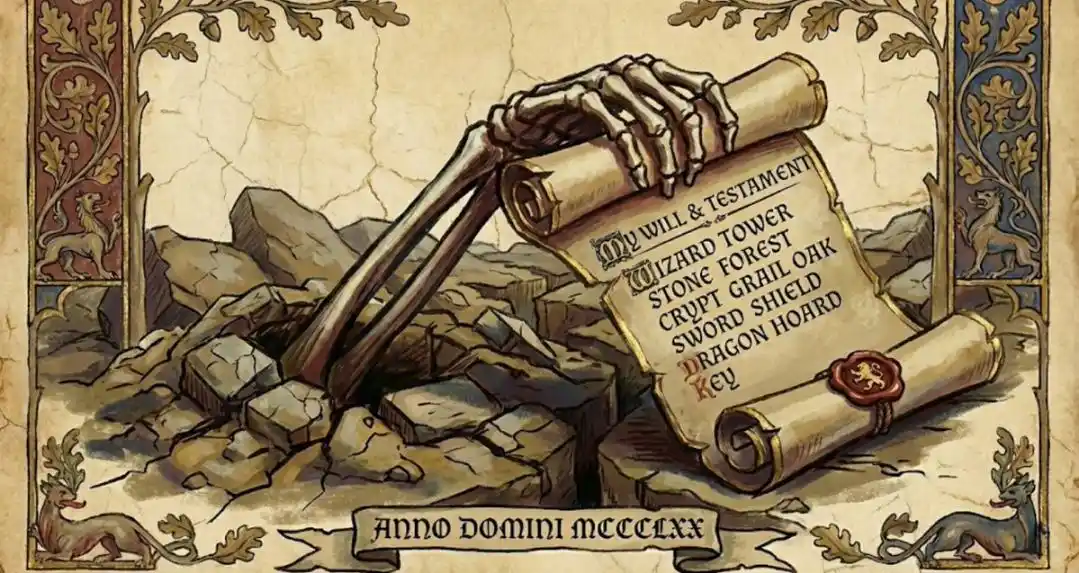
Currently, most solutions tend to lean towards two extremes: either simple yet fragile, such as storing the mnemonic phrase in a bank safe deposit box (easy to lose, easy to steal); or secure yet too complex for anyone to actually use. Neither of these solutions is satisfactory, so I have adopted a compromise—a simple three-step inheritance method that is easy to remember, difficult to crack, accessible anytime and anywhere, and ensures 100% non-custodial (i.e., without relying on intermediaries). The specific steps are as follows:
Step 1: Set Up a Dedicated Single-Page Website
Create a single-page website using a "obscure domain name" consisting of 3-4 words—this type of domain name is not something an average person would easily type into the search bar, but it should have special meaning to you for easy memorization. Additionally, prepay hosting fees for more than 10 years in advance and set up automatic renewal to ensure the long-term accessibility of the website.
Step 2: Encrypt the Mnemonic Phrase into a Numeric String
Choose a book you like, identify the most common publisher of that book, and purchase 10 copies (ensuring each book has identical page numbers and layouts). Then, convert your cryptocurrency wallet's mnemonic phrase into a numeric string: for each word in the mnemonic phrase, locate its position in the book and record the "page number - line number - word position in that line". For example, "112, 3, 5" represents "Page 112, Line 3, 5th word." Convert all mnemonic words into numeric strings using this method.
Step 3: Upload the Numeric Strings to the Dedicated Website
Simply publish the converted numeric strings in list form on your dedicated website, following this format:

By the way, this is a numeric string corresponding to a real mnemonic phrase, linked to $500 worth of cryptocurrency. However, the website domain name is fictional, and the actual mnemonic phrase is hidden in a certain book. Just a hint: I absolutely love detective novels. Wishing you all happy "treasure hunting"~
I know this may sound a bit "over the top," and some people may think it's unnecessary, but this approach can indeed make asset inheritance more flexible while ensuring security. You can further enhance security by, for example, using a rare book or a self-printed book to store the location information corresponding to the seed phrase; of course, you can also skip the hassle and simply put a hardware wallet (Ledger) and a metal plate engraved with the seed phrase in a safe deposit box. Otherwise, your cryptocurrency may end up being "donated" to the blockchain (i.e., permanently out of circulation).

You may also like

Morning Report | OpenAI has submitted an S-1 registration statement draft to the U.S. SEC; Morpho completes $175 million financing

Galaxy Deep Research Report: How Hyperliquid's HIP-4 Upgrade Changes the Landscape of Prediction Markets?

Latest research from 13 top universities including Cornell University: The current state, challenges, and misconceptions of the fusion of Crypto and AI

Deconstructing Anthropic: The Best AI Company, Possibly Also a Type of Organizational Invention

Every exchange is a "Universal Exchange."

The counterattack of traditional finance: Alliance chains are quietly reviving
Pantera Capital Partner: How Tokenization is Restructuring the Private Equity and Early Investment Ecosystem?

Mastercard Launches Agent Pay for AI, Plans to Record AI Agent Payment Authorizations on Polygon
Mastercard launched Agent Pay for AI, a new payment protocol designed to help AI agents make small payments such as pay-per-use access to data and APIs. The system plans to record human-granted AI agent permissions on Polygon, focusing on verifiable authorization, identity, and payment controls.

Curve Deploys Llamalend v2 on Optimism With 250,000 OP Incentives
Curve launched Llamalend v2 on Optimism with 250,000 OP incentives from the Optimism Foundation. The upgrade expands Llamalend beyond its earlier crvUSD-focused model, adding broader collateral support, LlamaRisk market reviews, and the ability to use Curve LP tokens as collateral.

Raydium Old Liquidity Pool Reportedly Exploited, With $1.34 Million Moved to Ethereum and Tornado Cash
An old Raydium liquidity pool was reportedly exploited for around $1.34 million in USDC, RAY, and wSOL, with the stolen funds bridged to Ethereum and deposited into Tornado Cash. The incident highlights the tail risks of legacy DeFi pools, old contracts, and cross-chain fund laundering paths.
Kalshi Executive Challenges “SBF Backed AI Unicorns” Narrative, Says Leopold Aschenbrenner Was Key Figure
Kalshi executive John Wang questioned the “SBF backed AI unicorns” narrative, saying Leopold Aschenbrenner was the key figure behind major AI investment decisions.

New York Proposes Stricter Stablecoin Issuer Rules Aligned With Federal GENIUS Act
NYDFS proposed stricter stablecoin issuer rules aligned with the GENIUS Act, covering reserves, custody, redemption timelines, audits, and capital buffers.

CryptoQuant Says Bitcoin Profitable Supply Is Near 45% Pressure Zone as On-Chain Data Points to Market Repricing
CryptoQuant said Bitcoin’s profitable supply is nearing the 45% pressure zone, signaling rising market stress, unrealized losses, and a possible on-chain repricing phase.

Bitcoin Falls Below 200-Week Moving Average as On-Chain Data Shows Over Half of Supply in Loss
Bitcoin dropped below its 200-week moving average as on-chain data showed over 50% of circulating supply is now in loss, signaling rising market stress.

CFTC Reportedly Plans New Prediction Market Rules Focused on Manipulation Risk and Public Interest Review
The CFTC is reportedly preparing new prediction market rules focused on manipulation risk, public interest review, and retail trader protections.

Meet the new WEEX trial fund—your gateway to greater profits

WEEX Labs Lands at Dutch Blockchain Week: A Disruptive Crypto × AI Conversation Sets Sail in Amsterdam
SK Hynix Reportedly Plans U.S. ADR Listing as Early as August, With SEC Approval Possible in Late June
SK Hynix may pursue a U.S. ADR listing as early as August, with SEC approval reportedly possible in late June amid strong AI chip supply chain demand.
Morning Report | OpenAI has submitted an S-1 registration statement draft to the U.S. SEC; Morpho completes $175 million financing
Galaxy Deep Research Report: How Hyperliquid's HIP-4 Upgrade Changes the Landscape of Prediction Markets?
Latest research from 13 top universities including Cornell University: The current state, challenges, and misconceptions of the fusion of Crypto and AI
Deconstructing Anthropic: The Best AI Company, Possibly Also a Type of Organizational Invention
Every exchange is a "Universal Exchange."
The counterattack of traditional finance: Alliance chains are quietly reviving


